
AI Clubhouse Design Meetup #1
11 jul 2026
our first design deep dive. motion cloned from a prompt, a personal satellite mission control, a community designed to end, consent for the users you did not know you had, AI-assisted rover operations, and a short film that still needed a director.
Overview
- Date: Saturday, July 11, 2026
- Format: AI Clubhouse's first industry-focused meetup for product designers and creative technologists
- Program: 1 sponsor demo, a design-focused This Month in AI roundup, and 5 community talks
- The range: Motion prototyping, satellite dashboards, community design, child safety, Mars rover operations, and AI-native video production
- Vibe check: A design event where nobody agreed that speed was the interesting part. Intent, taste, consent, cost, and responsibility kept taking the microphone back
The Brief
The question behind the first design deep dive was not whether AI can produce screens. That argument is over. The useful questions are what deserves to become a product, how a designer gives an agent direction, who gets affected by the output, and where human review belongs when the stakes are higher than a landing page.
The talks answered from radically different environments—a solo side project, a county education office, a creative studio, and the surface of Mars—but landed on the same point: generation is only one part of design.
Sponsor Demo
Zero: Agentic Services for Designers
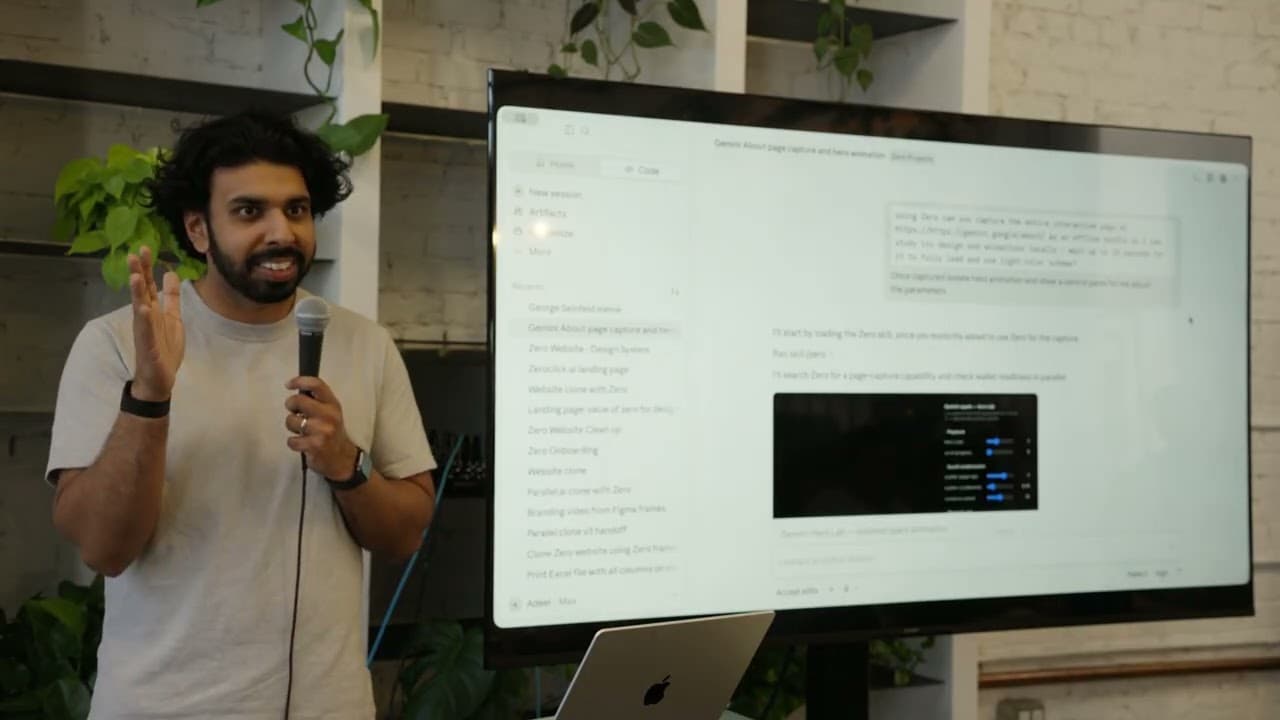
Watch full demo- Adeel introduced Zero as a way for Claude Code, Codex, Gemini, OpenClaw, Hermes, and other agents to discover and pay for services without a designer maintaining a stack of API keys and SaaS subscriptions
- His everyday use case starts with inspiration: find a site with a motion pattern you like, ask an agent to clone the interaction, then expose controls so you can explore the behavior instead of copying it blindly
- He demonstrated the workflow on a Gemini animation, reconstructed it as an editable prototype, changed the page for the meetup, and deployed the result through another Zero service
- The design value was not "AI made a website." It was giving a designer a fast, inspectable study of motion that would otherwise require specialist implementation before the real iteration could begin
This Month in AI
The Design Tools Radar
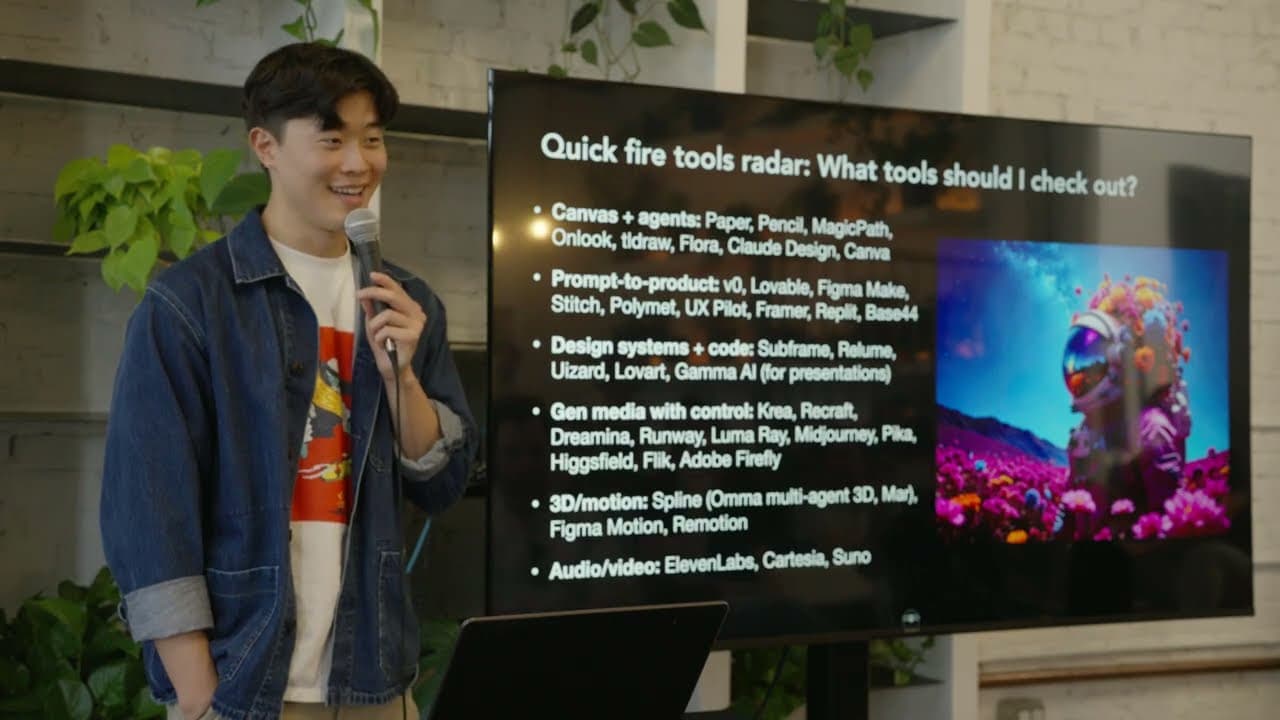
Watch full demo- JM compressed a fast month of model releases, consumer AI news, and creative tooling into a practical radar for designers
- The tool map stretched across canvases and agents, prompt-to-product systems, design-to-code platforms, controlled media generation, 3D and motion, and audio and video tools
- The important change was breadth. Designers were no longer choosing one AI app; they were composing different systems for research, visual direction, prototyping, code, motion, and production
- That made the rest of the afternoon especially useful: every speaker focused less on the list of tools and more on the process that made the tools produce something coherent
Talk Highlights
1. David T. Phung: English as a Design Tool
Watch full demo- David drew a line between capital-D Design—intent, judgment, point of view, and audience—and lowercase-d production: screens, components, tokens, and code
- His claim: "English is the most powerful design tool ever shipped." If language can now become a working system, the designer's job shifts toward direction and evaluation
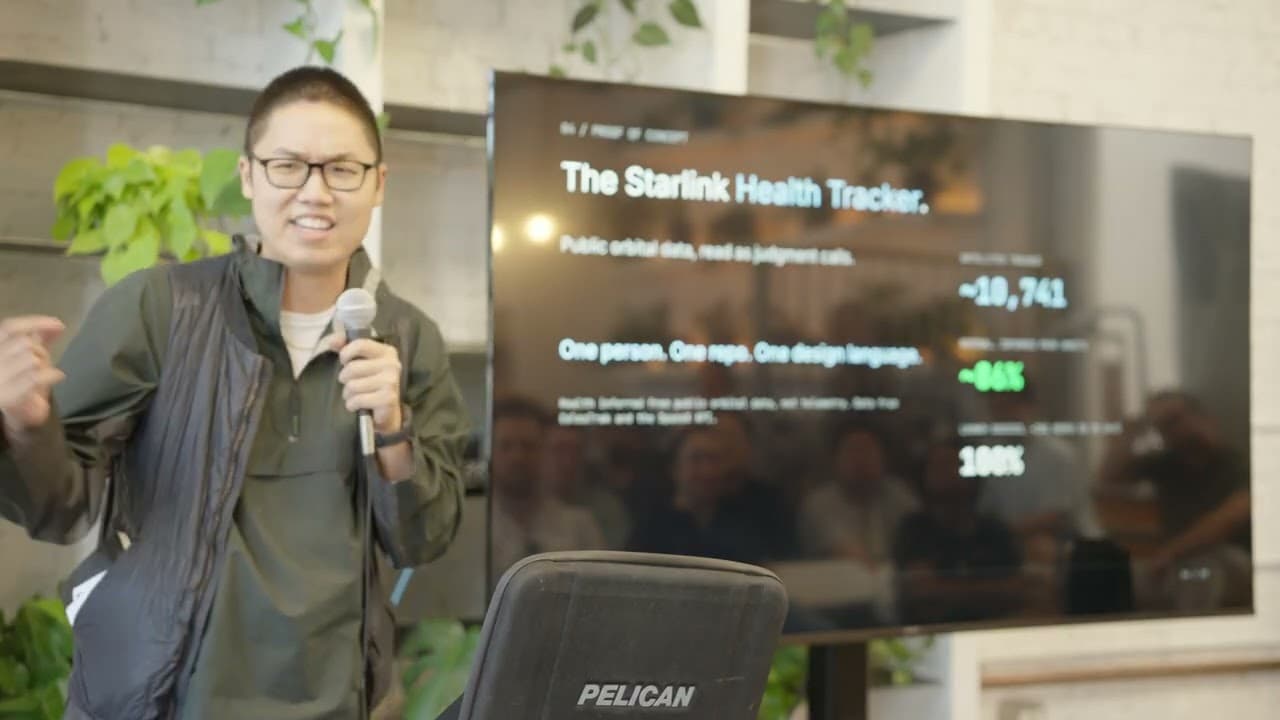
- To prove it, he built a personal Starlink mission-control dashboard. Local agents collect public orbital data twice a day, track launches and satellite health, and feed a live 3D interface he can use when traveling remotely
- His process stays deliberately unglamorous: write the intent, let the machine read the source material, ship the ugly thing, orient, decide, tighten, and get feedback. Machines can fly the loop; the human still chooses the mission
2. Farah: Season, a Community Designed to End
Watch full demo- Farah began with creator loneliness, then interviewed friends and broke the problem into disconnection, overexposure, procrastination, and misalignment
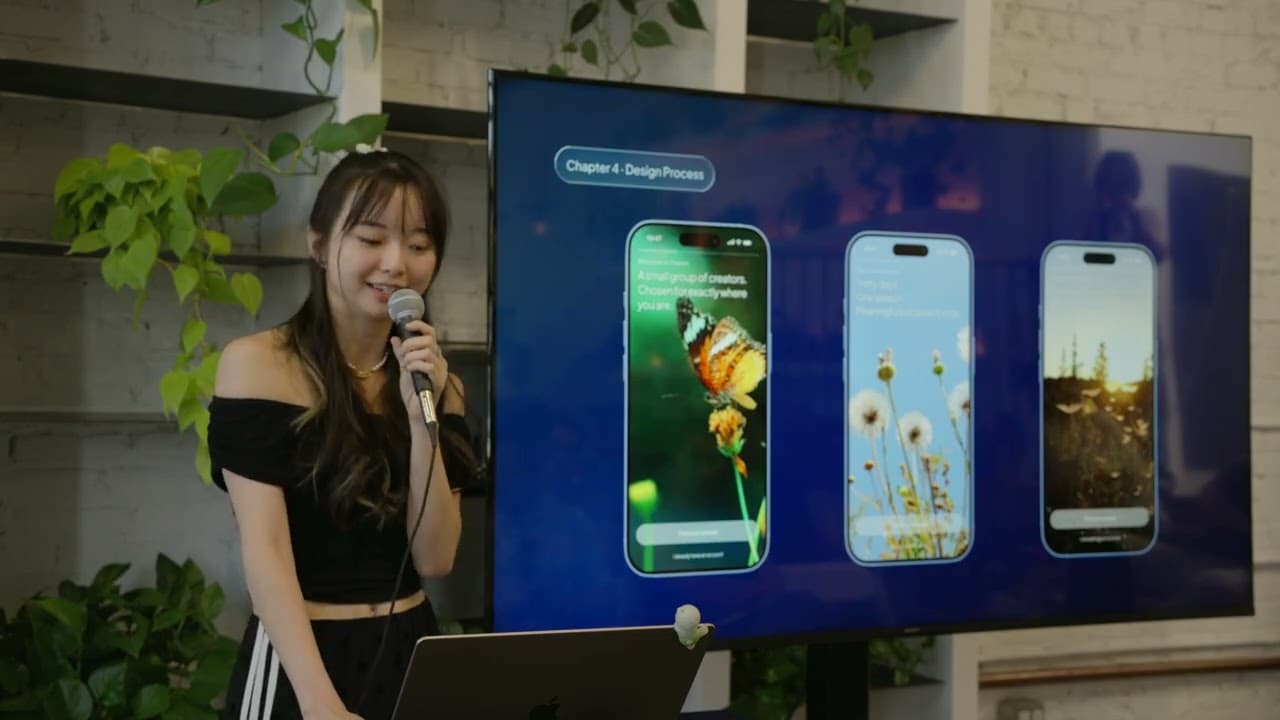
- Her answer was Season, a 30-day community that intentionally ends. Creators are matched into small groups, receive daily prompts, then decide which relationships to carry forward before joining a new season
- Before involving AI, she defined the emotional foundation herself: mono no aware, the bittersweet awareness of impermanence; gradients and translucent surfaces to suggest passing time; and a dandelion motif that changes across the product lifecycle
- Figma and Claude Code helped execute the flows, but her conclusion resisted the standard productivity story. AI sped the process up only a little. More importantly, it forced her to practice giving precise direction and made her work more like a design director
- "Good design always originates from real human experience."
3. Jack Beaton: Consent at Scale
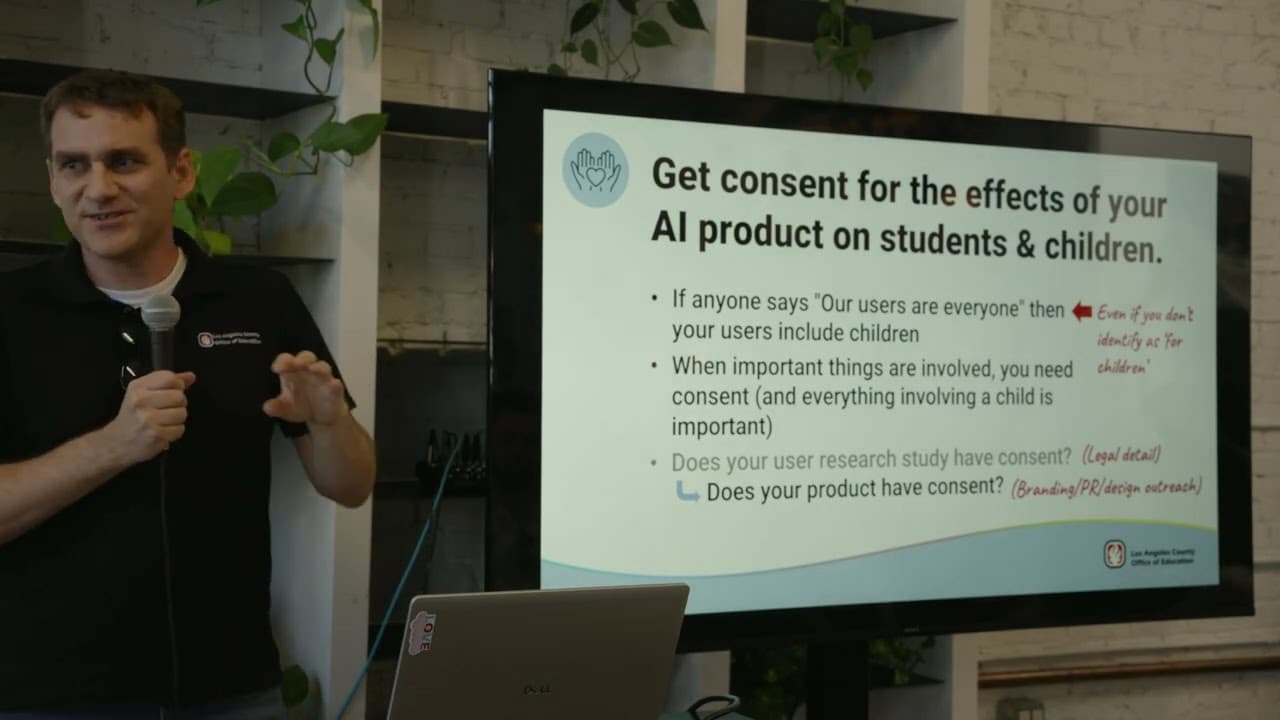
Watch full demo- Jack works at the Los Angeles County Office of Education, where technology is deployed in contexts involving children, student data, public accountability, and very little room for hand-waving
- His warning to general-purpose AI builders: if the product's users are "everyone," then some of the users are children—even if the product was never marketed to them
- The practical fix starts in ordinary user research. Add parents and teachers to recruiting quotas, show them evidence of the actual product behavior, ask specifically about risks to young people, document what you learn, and make the design changes before the crisis
- An age gate, safety constraint, or research record will not predict every failure. It does demonstrate intent, prepare the team to react faster, and help distinguish a company that planned for its real users from one that discovered them through bad press
- His closing line was deliberately sharp: "You can ask for forgiveness instead of permission, or you can seek consent. You cannot do both."
4. JPL: Designing AI-Assisted Rover Operations
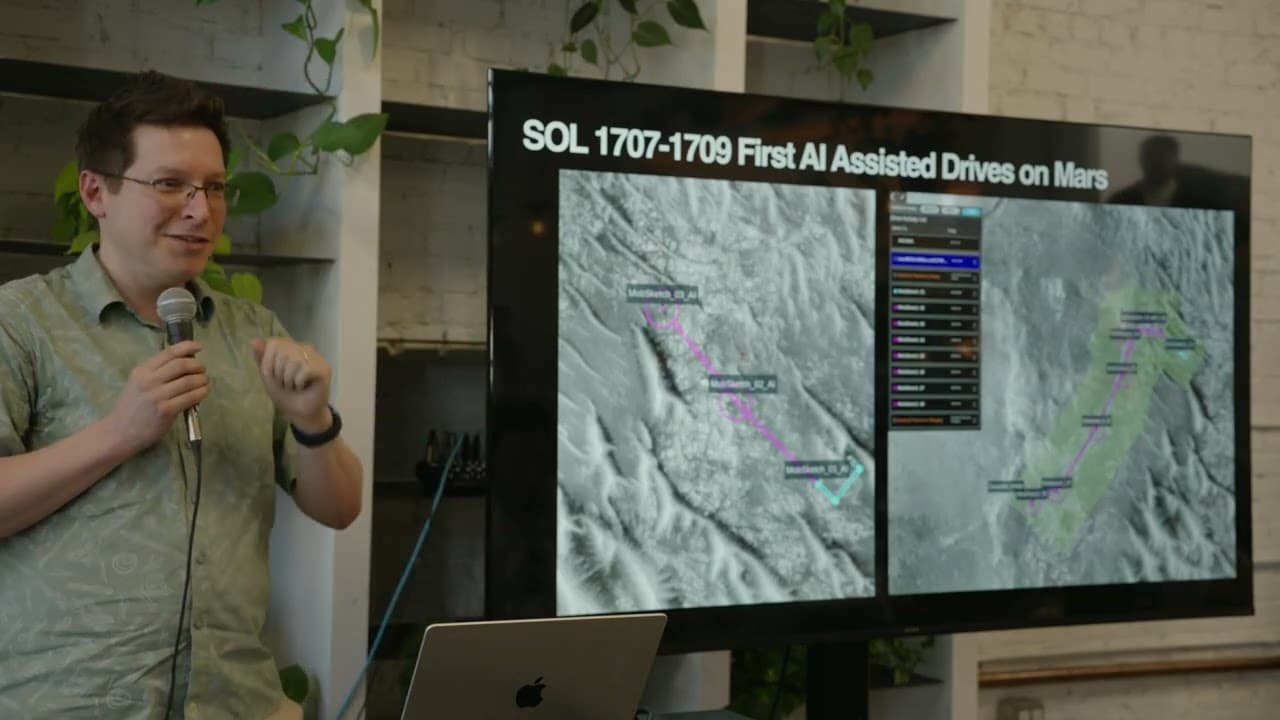
Watch full demo- JPL has used autonomous systems on Mars for years: rovers choose safe paths, onboard planners adapt schedules to changing conditions, and vision systems identify scientifically interesting targets
- The newer work brings AI into the ground workflow. Teams fed past drives, published algorithms, scientific constraints, and operational knowledge into Claude Code, then used the existing verification tools to check the generated plans
- Agents can sketch drive paths and handle tedious rock-by-rock screening while human operators stay at the capital-D level: defining the scientific objective and deciding whether the plan is safe
- A retrieval system also turns dense mission notes into usable context, cutting one review task from about twenty minutes to about five. A specialist-backed "AI scientist" can answer routine questions without requiring the human expert to be available at every moment
- The high-stakes lesson was not autonomy at all costs. It was layering new assistance underneath mature validation systems and keeping people responsible for verification and mission direction
5. Lisa Gu: The Real Cost of AI-Native Video
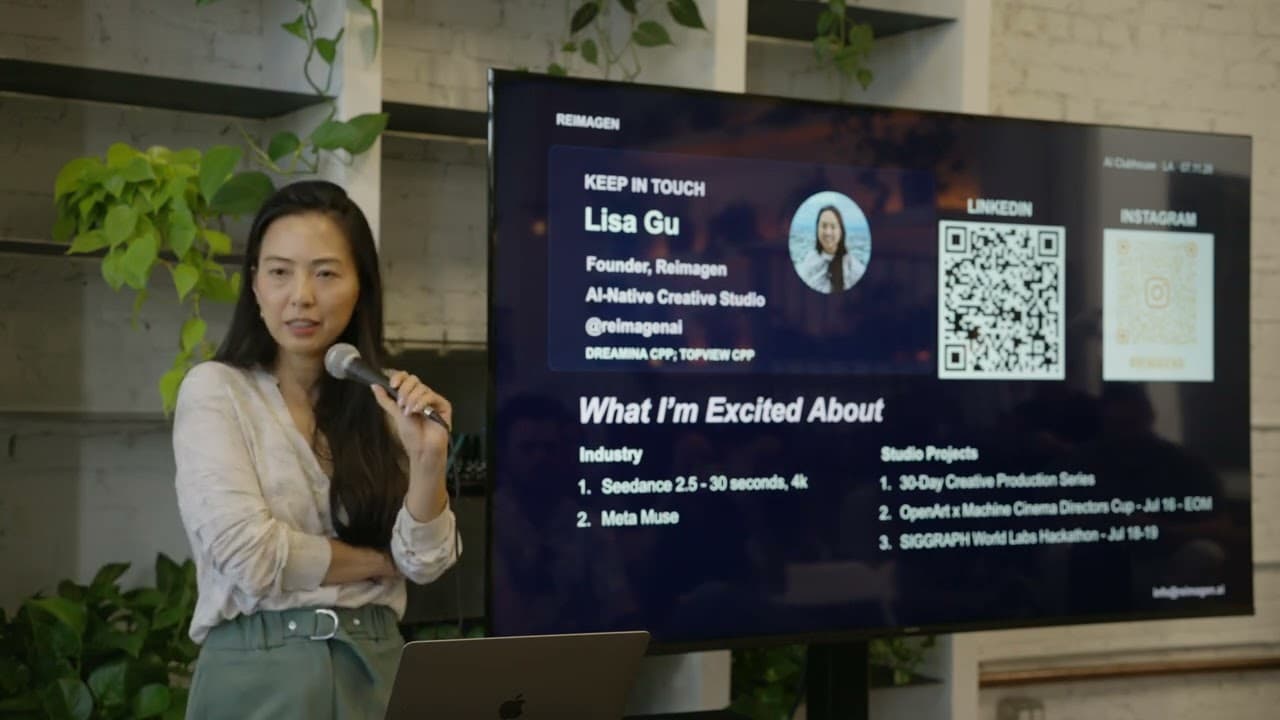
Watch full demo- Lisa returned with the operating details behind an AI-native creative studio: the inspiration sources, production stack, agent-guided canvases, credit tracking, and editing work that sit behind the finished clip
- The new budget surprise is agent usage. In one 30-second short, the agent conversation consumed 57% of the credits; on another platform, a cheaper model kept that share near 4%. Model choice inside the tool is now a production decision
- Her visual workflow looks more like Figma than a slot machine: establish the concept and script, define reusable characters and locations, organize shots and storyboards, generate variants, then edit sound, music, timing, and continuity
- For one two-concept Fourth of July short, the generated video was convincing and the production took two half-days plus polish. Lisa's honest ratio was "80% planning, 10% generating, and another 10% editing."
- Lower costs do not remove the craft. They make brand worlds and narrative work available to budgets that previously had to spend everything on product shots and performance ads
Takeaways / Common Themes
1. Direction is the scarce design material.
David called it point of view. Farah called it lived experience. Lisa called it production hygiene. The generation layer became fast enough that the hard work moved into framing, sequencing, rejecting, and refining.
2. AI changes the designer's altitude.
Farah felt more like a design director. JPL engineers stayed at the mission-objective level while agents handled sketches and screening. Adeel turned a finished animation into an editable study. The work moved upward from executing every pixel to constructing a system that can execute under direction.
3. Safety belongs in the design process, not after launch.
Jack's consent framework and JPL's verification stack made the same structural point from very different stakes: identify the people and constraints early, test against them, and preserve accountable human judgment.
4. Agent economics are now part of the interface.
An agent can save production time while quietly consuming most of a credit budget. The model, routing, and degree of autonomy inside a creative tool affect what the product costs to use and therefore what kind of workflow it can support.
5. "Human in the loop" is too vague.
The talks named the human job precisely: set intent, protect users, choose the model, define the visual language, verify the plan, edit the story, and decide when it is ready to ship.
Shoutouts
- Zero Click for sponsoring the event and giving designers an agent-services playground
- Adeel, David, Farah, Jack, the JPL team, and Lisa for treating design as more than a faster route to screens
- Everyone who brought a real workflow, a real responsibility, or a real half-built product into the room