
AI Clubhouse LA Meetup #5
28 jun 2026
fifth monthly meetup. a lobster game built from one prompt, a choose-your-own-adventure cockroach, paintings turned into music, family stories crossing languages, and the first edition of this month in AI. the tools changed again. the reason for gathering did not.
Overview
- Date: Sunday, June 28, 2026
- Location: Zero Click's Los Angeles office
- Program: 1 sponsor demo, the first This Month in AI roundup, and 4 community talks
- The range: Agent services, generative video, a browser-based color organ, voice-first family memory, and AI music videos for internal teams
- Vibe check: Five meetups in, the room had moved past asking whether AI could make something. The sharper question was what was worth making, and how much of the builder should remain visible in the result
Welcome
- JM welcomed everyone to the fifth monthly meetup and retold the accidental origin story: he and Robin hosted LA's first OpenClaw meetup in February, people immediately asked when the next one was, and the calendar kept filling itself
- By June, AI Clubhouse had expanded beyond the flagship meetup into engineering deep dives, Claude and Codex workshops, and industry-focused sessions. The next two announcements were a July 7 vibe-code night and the first design meetup on July 11
- Robin thanked Zero Click, Privy, and Here.Now for supporting the community. Zero opened its new office to the group again, complete with a badly needed upgrade from the prior month: fans
Sponsor Demo
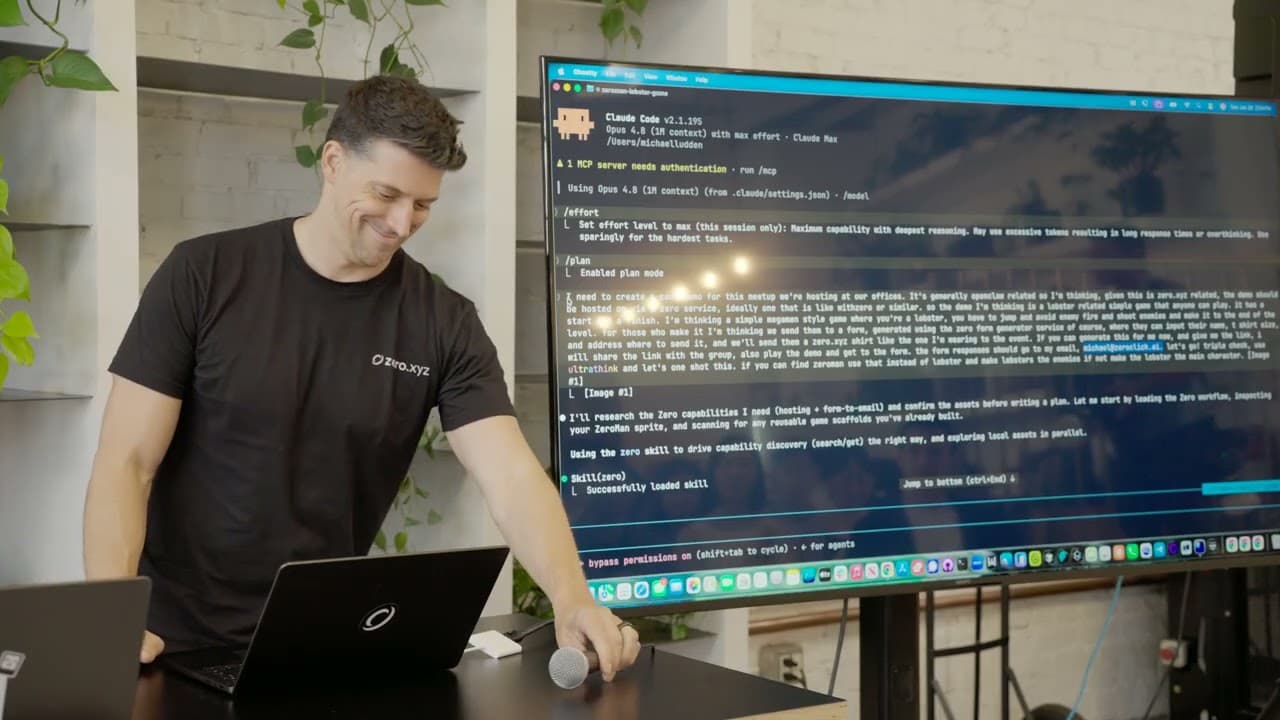
Zero: A Lobster Game, T-Shirt Workflow, and One Prompt
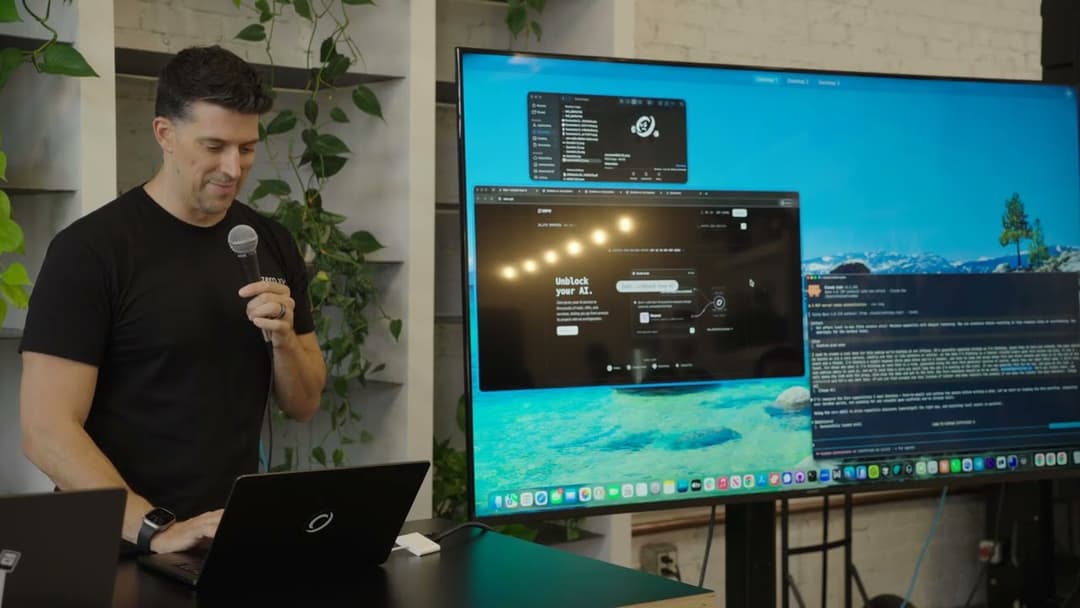
Watch full demo- Michael opened Zero and discovered the service count had jumped again: roughly 21,000 agent-accessible services available without setting up separate API keys or subscriptions
- His prompt asked Claude Code for a Mega Man-style lobster game, a hosted site, a generated form, and an email workflow for sending shirts to anyone who beat King Lobster. Zero found and paid for the required services as the agent worked
- The dangerous part of a live game demo is that the presenter still has to win the game. Michael died a few times, beat the boss, reached the generated form, and confirmed that the submission email arrived
- The whole chain—game, deployment, form, and notification—came from one prompt. The demo made the agent-services pitch concrete: the model did not merely write code; it found the infrastructure it needed and finished the workflow
This Month in AI
The First This Month in AI Roundup
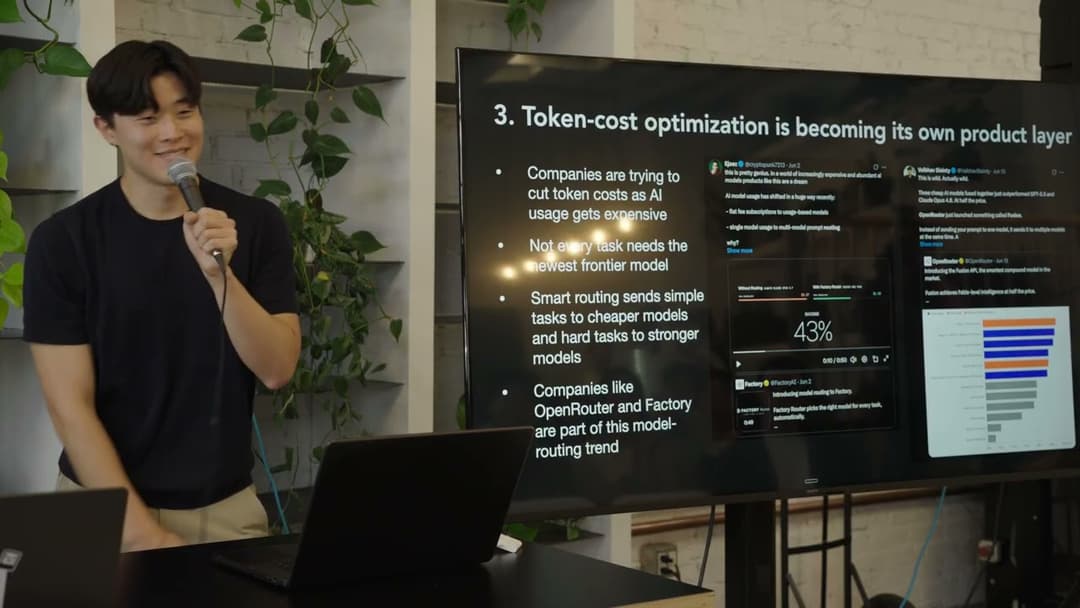
Watch full demo- JM introduced a recurring speedrun for everyone who did not want to spend the month doom-scrolling AI news. The first edition covered frontier-model access, open-source gains, model routing, agent platforms, consumer hardware, and creative media
- The practical throughline was cost and composition: send routine work to cheaper models, reserve the strongest models for orchestration or review, and treat routing as its own product layer
- The agent landscape had already shifted since the community's first OpenClaw gathering. Native tools such as Claude Code and Codex were becoming more agentic, Hermes was gaining attention, and long-running loops were turning fixed subscriptions into something closer to a shift schedule
- Creative AI was no longer a side note. Production-quality image and video systems, AI-assisted VFX, and interface-generation tools were becoming part of the same builder stack as coding agents
Demo Highlights
1. Lisa Gu: From Slot-Machine Clips to Actual Stories
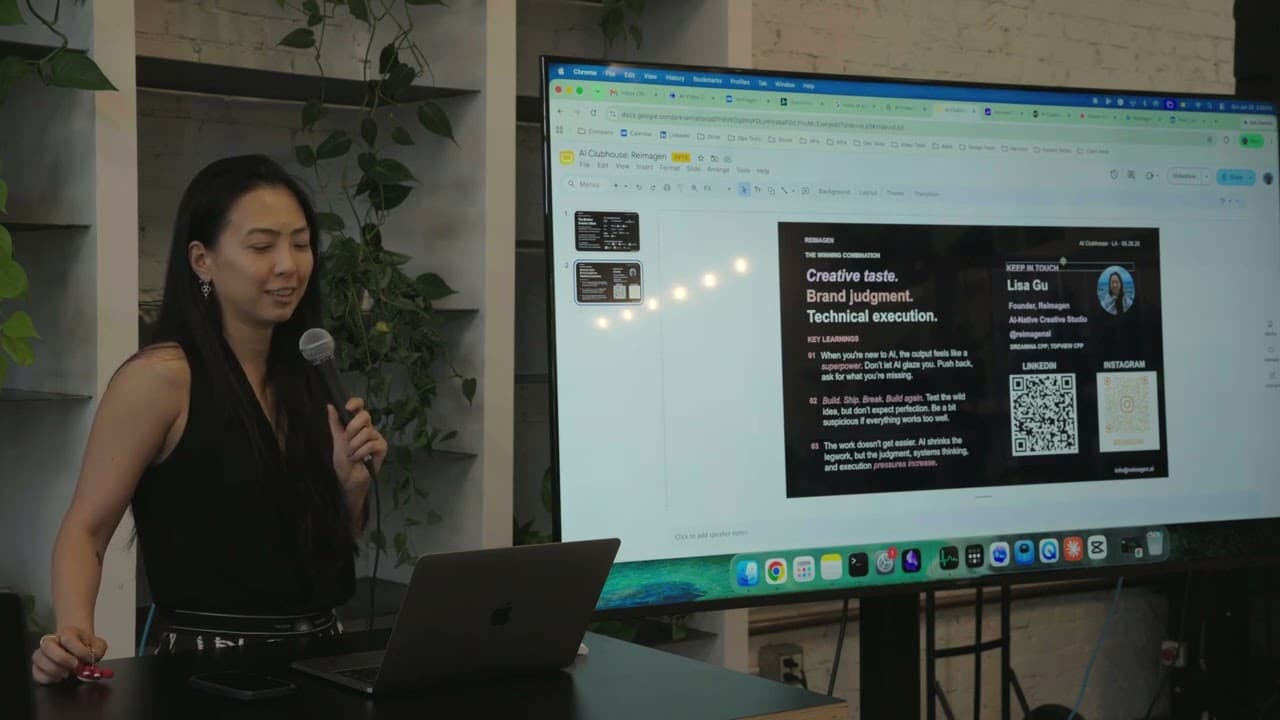
Watch full demo- Lisa runs Reimagine, an AI-native creative studio, after a decade in advertising and ad tech. Her current stack spans Claude, Codex, Obsidian, terminal workspaces, and a long list of image and video systems
- The useful shift is from isolated prompts to managed productions: define characters, locations, scenes, storyboards, and audio, then keep them consistent across a longer narrative
- She showed a choose-your-own-adventure short called The Roach's Last Stand. The room voted on whether the character should fight kitchen fires with water or a lid; at least one branch ended badly
- One polished example took about ninety minutes, but Lisa was clear that the speed comes from production experience, not a magic button. "If you are good at narrative and you have a really strong imagination, all your intrusive thoughts can now become video content."
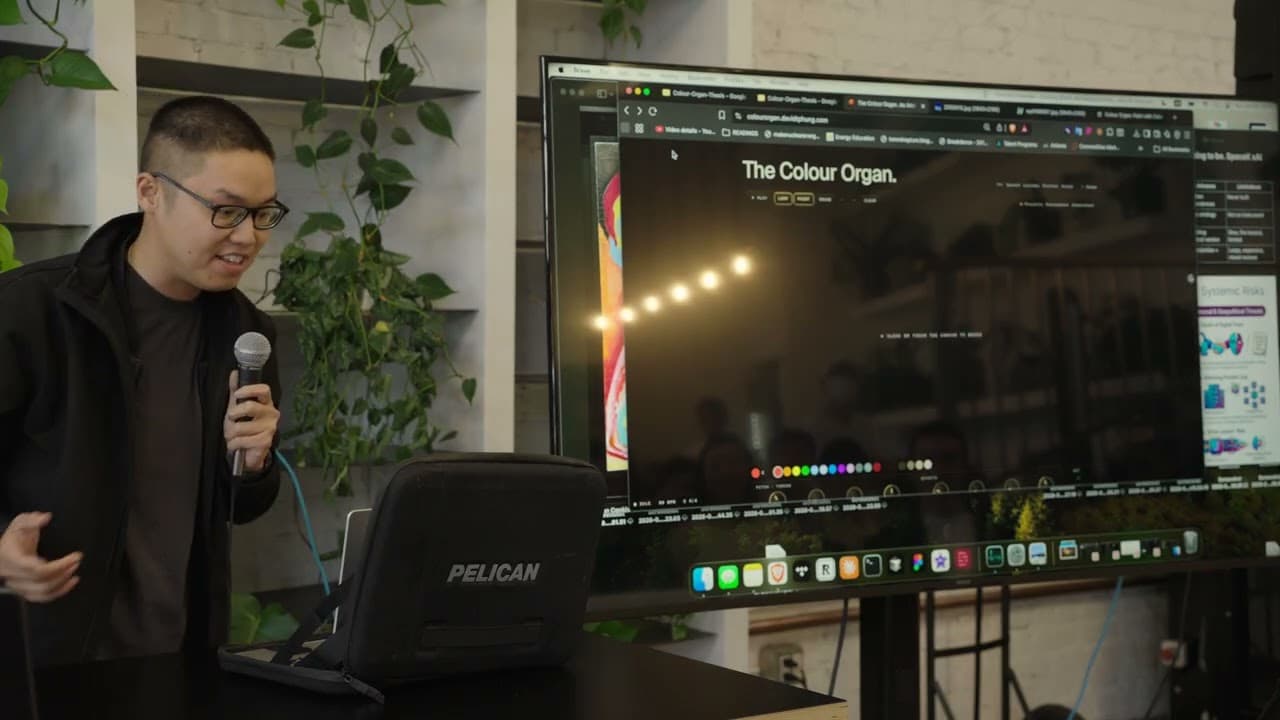
2. David T. Phung: The Colour Organ
Watch full demo- David proposed a language change: stop calling them AI tools and start thinking of them as intelligent machines—instruments that extend what a person can do
- His provocation was simple: "Your imagination and good attitude is the cap, not the tokens."
- The Colour Organ maps hue, brightness, saturation, and grayscale values to sound. Draw colored notes, feed it a painting, and the browser turns the visual rules into music; future experiments include scoring silent film
- His build rule is worth stealing: find a deep idea, reduce it to one move, ship the ugly draft, tighten it until it reads, and let other people play with it
3. Ingwon Chae: Ember and the Family Archive
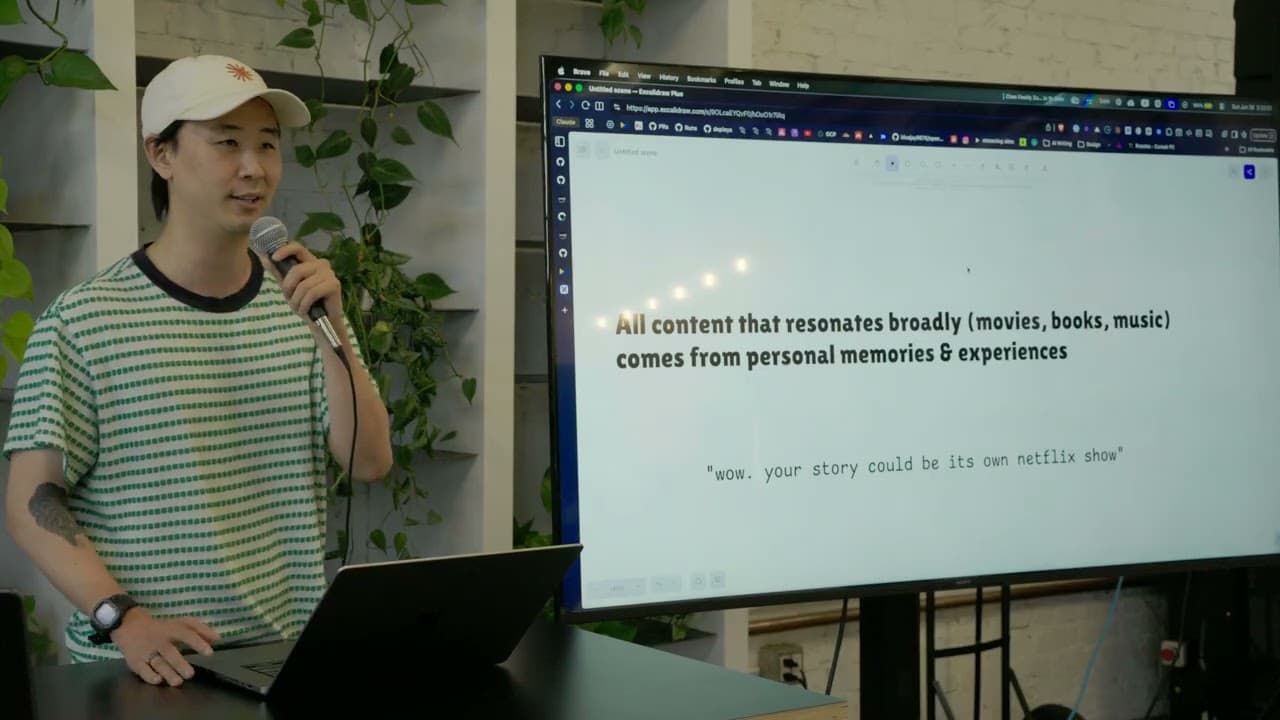
Watch full demo- Ingwon and his brother started Ember after their 70-year-old father said he wanted to write his autobiography. They built a voice-first app that helps people remember and record stories through conversation
- His father speaks primarily in Korean; the brothers are more comfortable reading English. Ember preserves the original voice memory while automatically creating a summary the rest of the family can read
- The recorded story becomes source material for poems, images, and eventually video. The generative layer is grounded in something that is not synthetic at all: a real memory from a real person
- Their product thesis: the content that resonates most often begins in lived experience, and lowering the friction of capturing that experience creates a better starting point than generating from nothing
4. John S. Moh: Start With AI, End With I
Watch full demo- John works on agents in big tech, but his talk was about a different problem: getting coworkers to pay attention
- For an internal agent community, he turned announcements into short AI music videos. For an in-person hackathon, he generated multiple musical versions of the same instruction—nine use cases, eight teams, choose quickly—so the message met people in genres they already liked
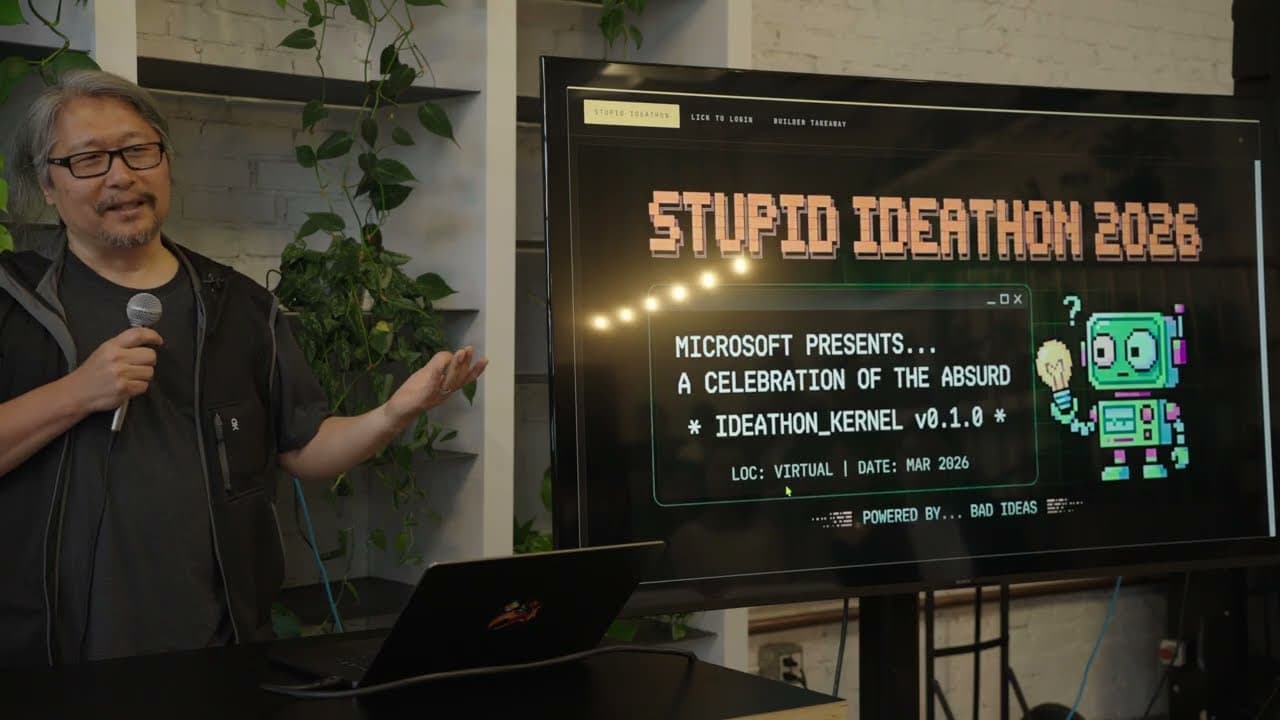
- He also helped create and win a "stupid ideathon" with a deliberately terrible biometric login concept and a motion-graphics pitch made in about fifteen minutes
- The closing principle pulled the whole afternoon together: "Start with AI and end with I." Human judgment, empathy, taste, and voice still need to be present in the thing that ships
Takeaways / Common Themes
1. Agents are starting to acquire their own production stack.
Zero let an agent discover hosting, forms, and email delivery without a human wiring every service. Lisa's workflow put an agent beside a visual production canvas. The useful unit is becoming the complete workflow, not the single model response.
2. Cheap generation makes judgment more expensive.
David framed imagination as the constraint. Lisa framed narrative experience as the constraint. John framed personal voice as the constraint. When the mechanical cost approaches zero, the person choosing the direction matters more.
3. The best source material was human.
Ember worked because it began with a father's memories. John's videos worked because they used the language and humor of a specific team. The demos that landed hardest were not the most generic or autonomous; they had someone recognizable inside them.
4. AI Clubhouse is becoming a program, not just a monthly meetup.
Engineering deep dives, workshops, coworking nights, and the upcoming design session had joined the flagship meetup. The community was starting to separate "what can this do?" from "how do engineers, designers, and operators use it well?"
After the Event
- The formal program stayed tight, leaving another hour for questions, hallway demos, and the usual laptop huddles
- JM and community member Andy prototyped an AI photo booth for the event, giving everyone one more generative system to break, improve, and make memories with
- The next gathering was already on the calendar: the first AI Clubhouse design meetup on July 11
Shoutouts
- Zero Click, Privy, and Here.Now for sponsoring the event—and Zero Click for opening its office again
- Michael, Lisa, David, Ingwon, and John for making the talks concrete, funny, and useful
- Andy for building the photo booth with JM
- Everyone who spent another Sunday afternoon geeking out together: thank you