
Make complex ideas accessible
Our audience ranges from AI beginners to advanced practitioners. The best demos meet people in the middle, fast.
Anchor every concept to something the room already knows.
A short read for anyone applying to demo at our next meetup. The principles, the ground rules, and a few favorites from past meetups.
If your demo nails these, the format takes care of itself.
Our audience ranges from AI beginners to advanced practitioners. The best demos meet people in the middle, fast.
Anchor every concept to something the room already knows.
A product walkthrough is a tour. A great demo is a story: why you built it, what surprised you, how it actually works.
Show the artifact, but make the decisions, tradeoffs, and learnings the part people remember.
A technique, a mental model, a prompt, a pattern. Something one person in the room will try this week.
If you can finish with one sentence the audience copies down, the demo worked.
Watch one or two before applying. It's the fastest way to internalize the format.
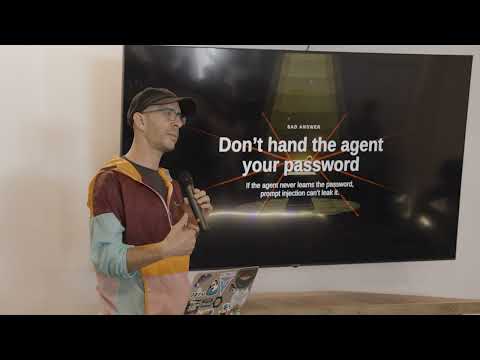
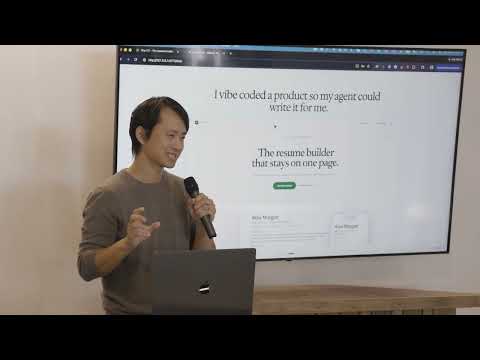
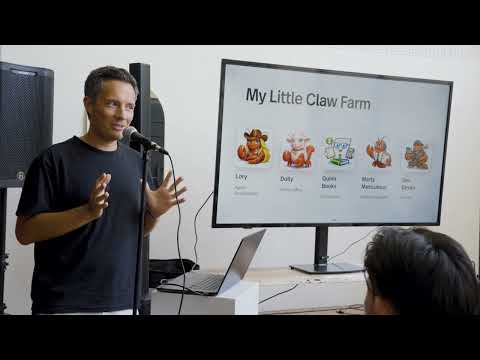
These are easy traps when you only have five minutes. Every one can be fixed by rewriting the demo around a takeaway.
Do not turn your five minutes into a pricing page, launch tease, or “book a demo to learn more” moment. The room is here to learn from what you built. Talk about the product only when it gives people a useful pattern, decision, or takeaway they can apply.
A good demo has a spine: problem, moment, takeaway. If you wander through screens with no destination, narrate every click, or let the energy drop, the room checks out fast. Bring momentum, make choices, and keep moving.
Live demos fail. Tabs go missing, APIs go down, screens refuse to mirror. Rehearsing with a timer is the difference between a story you control and a panic you don't.
When the demo is mostly architecture diagrams and library names, you lose the beginners early and the experts only remember the one thing you said at the end. Flip it.
Do these in order. If you can't answer the first one, the rest don't matter yet.
We'd love to have you demo. If you have something useful, surprising, or fun to share with the room, send it in. Questions first? Reach us at hello@aiclubhouse.com.